Acupuncture for Plantar Fasciitis: What to Expect
Plantar fasciitis is a common ailment almost everyone will experience at some point in their life. It typically presents with sharp, localized heel pain that is most pronounced during the first steps after rest — such as getting out of bed in the morning or standing after prolonged sitting — and tends to ease somewhat with continued movement, only to return after extended time on the feet.
What Is Plantar Fasciitis?
Plantar fasciitis refers to inflammation and micro-irritation of the plantar fascia, a thick band of connective tissue that runs along the sole of the foot, connecting the heel bone to the base of the toes. It supports the arch and absorbs impact during walking and standing; repetitive strain or overload can lead to irritation at its attachment point, most often at the heel.
Common contributing factors include prolonged standing or walking, unsupportive footwear, a sudden increase in physical activity, tight calf musculature, elevated body weight, and structural factors such as flat feet or high arches. But in some cases, no clear precipitating cause is identified.
A Traditional Chinese Medicine Perspective
In TCM, the foot is traversed by several major channels through which Qi and blood circulate. Pain and stiffness are generally understood to result from an obstruction or deficiency in this flow. When evaluating a patient with plantar fasciitis, common patterns include:
- Qi and blood stagnation, frequently associated with overuse, repetitive strain, prolonged weight-bearing activity or lack thereof
- Invasion of cold or dampness, often correlating with symptoms that worsen in cold or damp weather, or after cold exposure to the feet
- Kidney deficiency, a pattern associated in TCM theory with the health of bones, tendons, and the lower body, and one that becomes more clinically relevant with age
- Other deficiencies or excess patterns, nutritional deficiencies, dietary changes, or excess weight
Treatment is typically tailored to the pattern identified during intake and assessment, rather than applied uniformly to all cases.
Components of Treatment
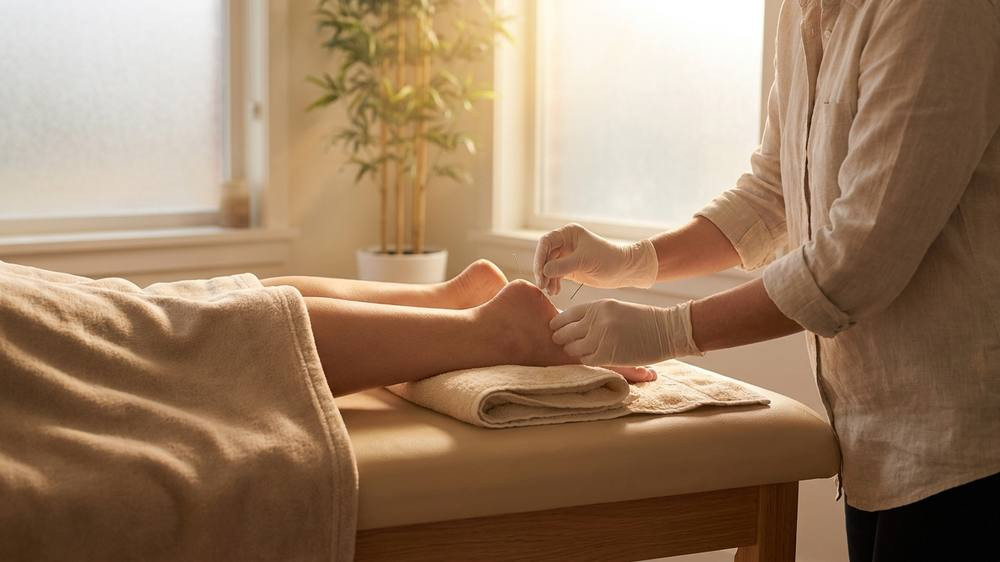
Acupuncture (local and distal points): Needling is generally performed both locally, around the heel and arch, and at distal points elsewhere on the leg or body. This combined approach is intended to address regional Qi stagnation as well as any systemic factors contributing to the condition.
Moxibustion and infrared heat: When cold or dampness is identified as a contributing pattern, moxibustion (the application of heat via an herb called mugwort) or infrared heat may be used to warm the affected tissue and promote circulation.
Cupping and gua sha: Cupping or gua sha (a scraping technique) may be applied to the calf and foot to address myofascial tightness, which frequently accompanies and can perpetuate plantar fascia irritation.
Herbal medicine: Chinese herbal formulas may be prescribed as an adjunct to needling, selected according to the presenting pattern — for example, formulas that promote circulation for stagnation-type presentations, or tonifying formulas addressing deficiency.
Expected Course of Treatment
The number of sessions required varies based on symptom duration and severity. A typical starting frequency is one to two sessions per week, with adjustments made as symptoms progress. Chronic cases (symptoms present for several months or longer) generally require a longer course of treatment than acute presentations. It is common for pain reduction to precede full functional improvement.
Role of Stretching and Physical Therapy
Acupuncture is often used alongside stretching protocols or physical therapy. Reducing inflammation and myofascial tightness through acupuncture can improve tolerance for stretching and strengthening exercises, potentially improving overall outcomes when both approaches are used concurrently.
Self-Care Recommendations
- Wear various shoes that shift where the pressure is distributed on the foot (heel vs ball of foot vs mid foot). Standing, walking, running or even just working in the same shoes all the time doesn’t allow the foot to “breathe” and move, creating stiffness in the fascia that can lead to pain.
- Perform calf and plantar fascia stretches regularly to promote blood flow and circulation and reduce tightness.
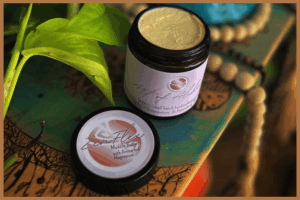
- Get foot massages and/or do foot soaks to soothe and nourish. Rub in our ZenFlex Muscle Butter into your arches to soften adhesions.
- Avoid pushing through sharp pain during activity; consistency in care is more beneficial than intensity.
- Can also wear toe spacers to help with foot pain and prevent bunion formation.
- Patients experiencing foot pain are encouraged to consult with a licensed acupuncturist or healthcare provider for an individualized evaluation and treatment plan.