By Dr. Hillary Talbott Roland, DAHM, AP, FABORM | Art of Acupuncture, St. Petersburg, FL
Evidence-Based Reproductive Medicine & Integrative Fertility Care
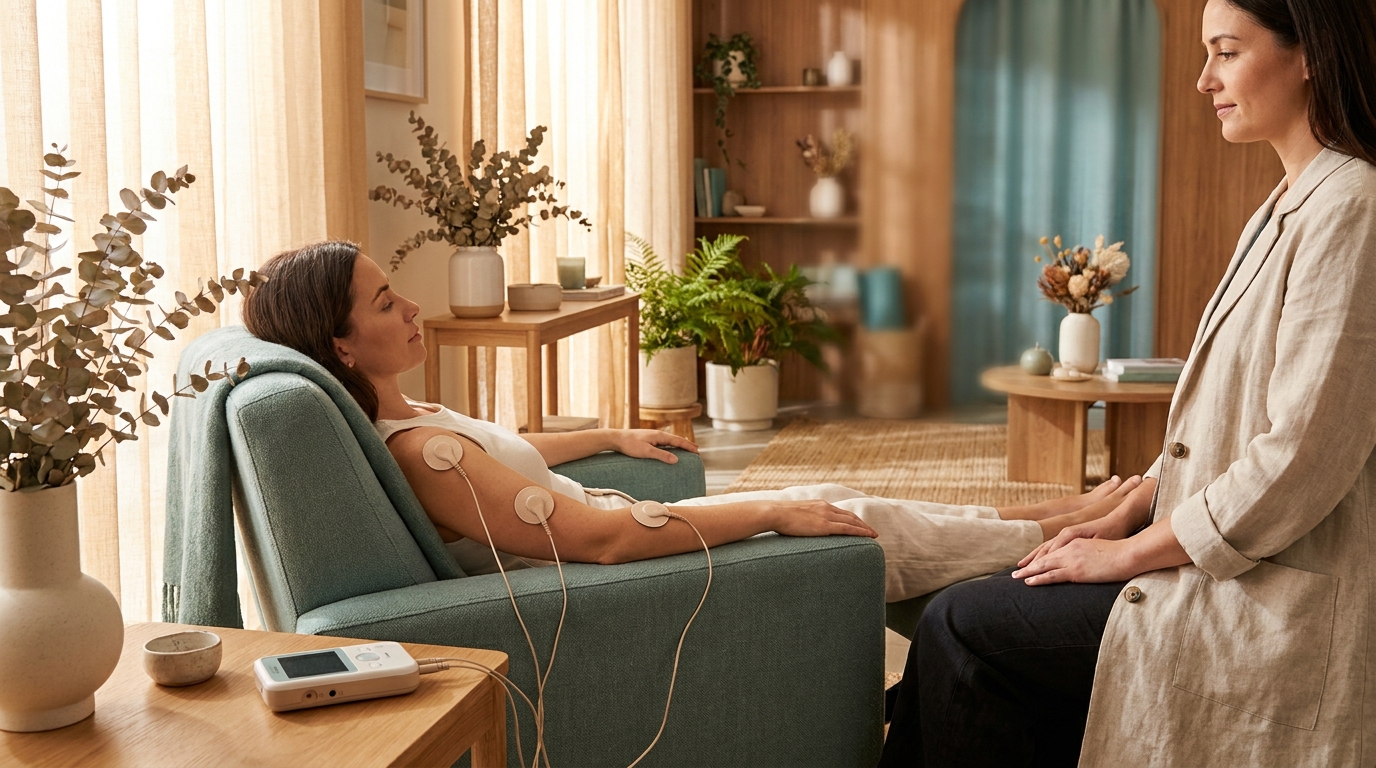
TEAS stands for transcutaneous electrical acupoint stimulation. It is a needle-free way to stimulate acupuncture points using small sticky electrode pads instead of needles. Think of it as an at-home extension of acupuncture: the same points, the same physiological goals, delivered through gentle electrical pulses you can apply yourself between office visits. For fertility, a growing body of research links TEAS to better IVF outcomes, improved sperm quality, and lower treatment-related anxiety. It’s non-invasive, affordable, and empowering, but it isn’t for everyone, and it should always be introduced and guided by a licensed acupuncturist. This guide covers exactly how it works, what the data show, who it can help, and the specific situations where it should not be used.
Key Takeaways
- Needle-Free At-Home Care: TEAS applies electrical stimulation to acupuncture points through skin electrodes instead of needles, allowing patients to support their own fertility care at home between clinical visits.
- 42% Boost in Clinical Pregnancy & Live Birth: A 2022 systematic review and meta-analysis of 19 trials found TEAS associated with roughly a 42% increase in both clinical pregnancy and live birth rates in IVF.
- High-Value Subgroups: It appears especially promising for women over 35, individuals with diminished ovarian reserve, patients managing IVF-related anxiety, and couples with male-factor concerns (sperm count and progressive motility).
- Clear Contraindications: Pacemakers, pregnancy (in luteal phase / post-ovulation), epilepsy, certain cancers, and pelvic DVT are strict contraindications, which is why professional practitioner guidance is essential.
- Integrative Synergy: TEAS complements—rather than replaces—individualized in-clinic acupuncture and comprehensive Chinese herbal medicine.
What TEAS Is (and How It Differs From TENS)
You may have seen a TENS unit—a small battery-operated device with sticky pads that people use for pain relief. TEAS uses the same kind of device, but with a crucial difference in where and how it’s applied.
TENS (transcutaneous electrical nerve stimulation) targets superficial nerves to block pain signals along the spinal cord (the “pain gate” theory), typically using a higher-frequency, lower-intensity current directly over a painful area. TEAS (transcutaneous electrical acupoint stimulation) places the electrodes precisely on acupuncture points and uses a lower frequency (usually 2 Hz) with enough intensity to produce a gentle, comfortable muscle tap.
Why stimulate points instead of broad nerve paths? Anatomical and neurovascular research suggests roughly 80% of classical acupuncture points sit over denser bundles of nerve and vessel tissue, often at anatomical junctions between muscle bellies and fascial planes. Stimulating them selectively influences autonomic tone, central endorphin release, and pelvic blood flow in ways uniquely suited for reproductive medicine rather than temporary pain inhibition.
The concept of using bioelectricity to heal has ancient roots—Egyptians documented using electric catfish for pain around 2750 BCE. Modern electroacupuncture research took off in the 1960s when Dr. Han Ji-Sheng demonstrated that targeted frequencies trigger the body to release its own endogenous neuropeptides and endorphins. Today, over a thousand published peer-reviewed studies evaluate TEAS across reproductive health, pain management, digestive disorders, and emotional wellness.
How TEAS Works for Fertility: Biological Pathways
Because TEAS stimulates the exact same acupoints and recruits the same peripheral nerve fibers as traditional filiform needles, it engages the biological pathways that make fertility acupuncture so effective in clinical practice. Key physiological mechanisms include:
- Calming the Nervous System & Enhancing Pelvic Hemodynamics: By stimulating small-diameter myelinated A-delta and unmyelinated C nerve fibers, TEAS inhibits hyperactive central sympathetic (“fight-or-flight”) tone. This systemic downregulation relaxes vascular resistance, increasing direct arterial blood perfusion to the ovaries, uterus, and endometrium.
- Upregulating Endogenous Opioids & Calming Neuropeptides: Low-frequency (2 Hz) TEAS boosts circulating beta-endorphins, enkephalins, and serotonin. Beta-endorphin buffering stabilizes the stress response and supports healthy uterine vascular perfusion.
- Regulating the Hypothalamic-Pituitary-Gonadal (HPG) Axis: By modulating central neurotransmitters—including dopamine, serotonin, and endorphins—TEAS helps normalize GnRH pulsatility and pituitary secretion of FSH and LH. In PCOS and PMOS, low-frequency stimulation assists in restoring regular ovulatory rhythm.
- Metabolic Modulation in PCOS: Similar to electroacupuncture, TEAS enhances skeletal-muscle glucose transporter type 4 (GLUT4) translocation, reduces hyperinsulinemia, and improves insulin clearance—vital metabolic support for PCOS-related fertility hurdles.
- Supporting Spermatogenesis & Semen Quality: In male partners, microcirculatory and neurochemical enhancements support testicular function, optimize calcium signaling pathways (C1BP1), decrease CDK1 levels, and raise seminal levels of zinc, fructose, and neutral alpha-glucosidase.
What the Clinical Research Shows
While reproductive electro-stimulation research continues to evolve, current randomized clinical trials and meta-analyses show consistent, statistically significant positive signals across key reproductive outcomes:
| Clinical Focus | Research Findings | Key Studies |
|---|---|---|
| IVF Clinical Pregnancy & Live Birth | 42% relative increase in clinical pregnancy rate (RR 1.42) across 19 trials (5,330 participants); 42% increase in live birth rate (RR 1.42) across 7 pooled trials (2,174 participants). | Yang et al., Frontiers in Public Health (2022) |
| Patients Aged 35 and Older | Significantly higher implantation (22.2% vs 14.1%) and live-birth rates (34.0% vs 19.7%) in women ≥35 receiving TEAS during IVF cycles. | Feng et al., Reprod Biol Endocrinol (2022) |
| Endometrial Receptivity | Higher post-transfer serum progesterone and enhanced pinopode formation (structures critical for embryo attachment) on endometrial biopsy. | Feng et al., Reprod Biol Endocrinol (2022) |
| Diminished Ovarian Reserve (DOR) | Favorable shifts in anti-Müllerian hormone (AMH), lower basal FSH, and increased antral follicle count compared to sham control protocols. | Multicenter DOR Trials |
| Repeat Implantation Failure (RIF) | Statistically significant improvements in clinical pregnancy and ongoing gestation rates compared to mock/sham cohorts. | Controlled RIF Cohort Trials |
| Treatment Anxiety & Cortisol | Mixed 2/100 Hz protocols prior to oocyte retrieval and embryo transfer substantially reduced acute pre-procedural anxiety scores. | Clinical Trial (360 IVF Patients) |
| Sperm Motility & Count | Daily 2 Hz TEAS over two 30-day cycles significantly increased total sperm count and progressive motility in men with abnormal semen parameters. | Yan et al., Acupunct Med (2019) |
Across these trials, TEAS was consistently verified as safe and well-tolerated with zero serious adverse events reported. Studies note that while semen parameters improved significantly, severe male-factor deficits may still require comprehensive medical assistance.
Who Can Benefit from TEAS?
Based on published clinical evidence and our integrative practice at Art of Acupuncture, TEAS is an exceptional candidate therapy for:
- Individuals preparing for or undergoing embryo transfer (fresh or frozen).
- Women aged 35 and older navigating IVF or IUI cycles.
- Individuals diagnosed with diminished ovarian reserve (DOR) or advanced reproductive age.
- Patients with a history of thin endometrial lining or repeat implantation failure (RIF).
- Women with PCOS or irregular ovulatory cycles seeking metabolic and follicular support.
- Individuals experiencing acute IVF-related procedural stress or cycle anxiety.
- Male partners with borderline or reduced sperm count, morphology, or progressive motility.
- Patients who are needle-sensitive, live at a distance from our clinic, or desire an empowered, daily active role in their reproductive journey.
Who Should NOT Use TEAS: Safety & Contraindications
Because TEAS delivers active microcurrents through biological tissues, professional oversight is non-negotiable. There are strict contraindications where electrical stimulation must be avoided:
Absolute Contraindications
- Implanted Electronic Devices: Pacemakers, implantable cardioverter-defibrillators (ICDs), or neurostimulators. (Non-electronic implants such as artificial heart valves are typically safe, but require written physician clearance).
- Active Pregnancy & Luteal Phase: TEAS is strictly contraindicated once pregnancy is confirmed or suspected. In natural or IUI trying-to-conceive cycles, TEAS is discontinued immediately following confirmed ovulation to safeguard early implantation.
- Active Malignancy: Abdominal neoplasms, lymphomas, or active pelvic cancers; electrical current is never applied over or near tumor sites.
- Epilepsy or Uncontrolled Seizure Disorders.
- Active Deep Vein Thrombosis (DVT) or Thrombophlebitis.
Electrode Placement Restrictions
Never apply electrodes over the transthoracic region (across the heart), over the carotid sinus (anterior and lateral neck), over the eyes or brainstem, or across open wounds, irradiated skin, or numb areas with diminished sensory perception (such as surgical scars with neuropathy).
Clinical Discretion & Precautions
- Active Menstruation: TEAS is routinely paused during full menstrual flow to prevent excessive pelvic vasodilation or heavy menses.
- High Ovarian Reserve & OHSS Risk: In patients with elevated baseline AMH or high antral follicle counts undergoing high-dose gonadotropin stimulation, TEAS is carefully managed and paused if ovarian hyperstimulation syndrome (OHSS) symptoms emerge. However, using TEAS 6–12 weeks prior to stimulation cycles provides powerful support for egg quality.
- Uterine Fibroids or Endometrial Polyps: Evaluated on a case-by-case basis by your acupuncture physician.
- Adhesive Sensitivities: Hypoallergenic silicone or water-based conductive pads can prevent mild contact dermatitis.
Why Patients Love TEAS (and Managing Minor Risks)
For patients walking the rigorous path of fertility treatments, TEAS provides tangible, deeply grounding advantages:
- Needle-Free Comfort: Zero needles or skin penetration—a tremendous relief for those fatigued by frequent blood draws and injections.
- Convenience & Accessibility: Administered from the comfort of home on your own schedule, cutting down on clinic travel stress.
- Emotional Empowerment: Fertility treatments often feel passive and overwhelming. TEAS offers a tangible, proactive routine that directly supports your reproductive health.
- Affordable & Synergistic: Home units and professional instructional point guides are accessible ($197 for the complete kit, electrodes, and video walkthroughs) and pair beautifully with alternating photobiomodulation (red light/LLLT) protocols.
Potential Side Effects: Side effects are exceedingly rare and mild. Skin redness from adhesive pads is easily resolved with hypoallergenic gels. Physiological accommodation (the body adapting to repetitive stimulation) is avoided by cycling frequencies or adjusting duty cycles under practitioner direction. Electrode burns are prevented by following prescribed low-intensity limits (gentle muscle tapping, never pain).
Integrating TEAS with Classical Chinese Medicine
TEAS does not replace in-person acupuncture; it amplifies it. In Traditional Chinese Medicine, reproduction depends on the harmonious interaction of Kidney Essence (Jing), free-flowing Liver Qi, rich nourishing Blood, and balanced Chong and Ren extraordinary vessels.
While electrical current provides the delivery medium, the therapeutic targets are classical acupoints selected for specific reproductive actions: tonifying Kidney Yang or Yin, clearing pelvic blood stasis, and calming the Shen (spirit). At Art of Acupuncture, each clinic visit features individualized tongue and pulse diagnostics and custom acupuncture needling. TEAS then provides an exact, daily bridge between clinic treatments, keeping your reproductive energetic channels active and responsive.
Recommended TEAS Protocol for Fertility
While individualized according to your diagnosis and menstrual cycle phase, standard evidence-based fertility parameters include:
- Frequency: 2 Hz continuous frequency (or alternating 2/100 Hz dense-disperse mode).
- Pulse Width: 300–600 microseconds.
- Intensity: Comfortable, rhythmic tapping sensation (typically 12–18 mA, well below any discomfort threshold).
- Duration & Cadence: 30 minutes per session, 2 to 3 times per week, ideally initiated 8 to 12 weeks prior to egg retrieval or embryo transfer to span a full folliculogenesis cycle.
Take the Next Step in Your Fertility Journey
TEAS represents a modern synthesis of ancient acupoint science and modern neurobiology: needle-free, evidence-backed, accessible at home, and beneficial for both partners. While not a standalone cure, it serves as a powerful integrative modality that can shift reproductive outcomes in your favor.
If you live in St. Petersburg or the greater Tampa Bay area and want to explore whether TEAS or specialized fertility acupuncture is appropriate for you or your partner, our ABORM-certified team is here to guide you with clinical excellence and compassionate care. Schedule an integrative fertility consultation online or contact our office directly.
Medical Disclaimer: This guide is educational and does not constitute individualized medical diagnosis or treatment advice. Electrical stimulation devices should only be initiated under the guidance of a licensed acupuncture physician and in coordination with your reproductive endocrinologist or OB/GYN.
References
- Yang H, Hu WH, Xu GX, et al. Transcutaneous electrical acupoint stimulation for pregnancy outcomes in women undergoing in vitro fertilization-embryo transfer: a systematic review and meta-analysis. Front Public Health. 2022;10:892973.
- Feng J, et al. Transcutaneous electrical acupoint stimulation improves endometrial receptivity resulting in improved IVF-ET pregnancy outcomes in older women: a multicenter, randomized, controlled clinical trial. Reprod Biol Endocrinol. 2022;20(1):130.
- Yan Y, Sha SB, Zhang B, et al. Effects and mechanism of action of transcutaneous electrical acupuncture point stimulation in patients with abnormal semen parameters. Acupunct Med. 2019;37(1):24-32.
- Hullender Rubin LE. Transcutaneous Electroacupuncture Stimulation (TEAS) for Fertility [continuing-education course]. Rosefinch Academy; 2023.